J—01 — Materials
Materials that remember
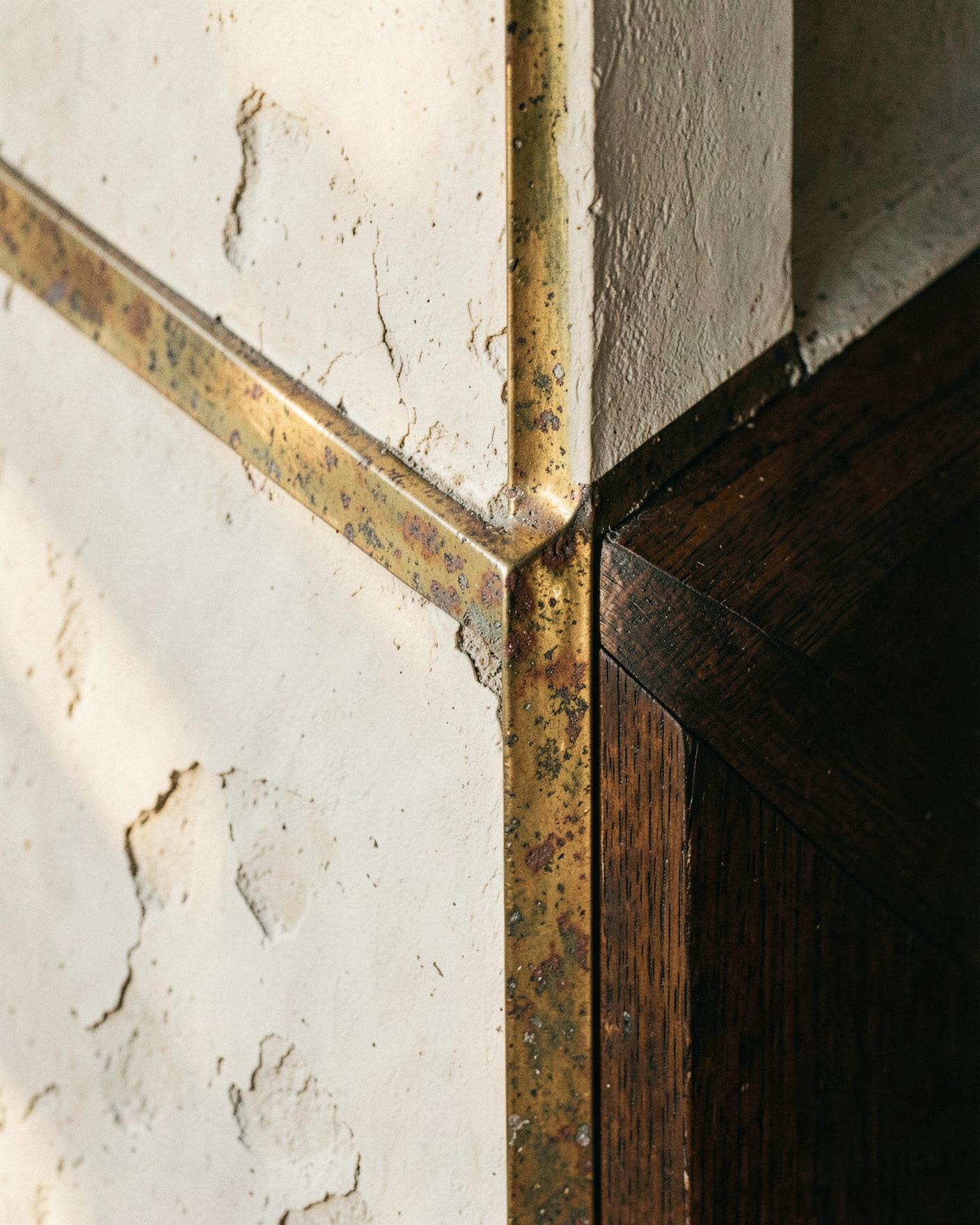
Patina is not damage. It is the record of touch, weather and time becoming part of the architecture.
08 September 2026 / 6 min read
The first mark
Architecture is often photographed at the instant before life begins: floors untouched, brass unmarked, stone without a stain. But occupation is not an interruption to architecture. It is the process that completes it.
We choose materials by imagining their tenth year, not only their first day. Lime plaster softens and gathers small repairs. Timber deepens where hands return. Brass records every threshold crossed.
“A building becomes more itself when its surfaces stop pretending to be new.”
Designing for change
Ageing well is not the same as being indestructible. It means allowing wear to become legible without becoming failure. A detail can protect an edge while leaving the wider surface free to change.
This asks for restraint: fewer coatings, honest junctions and materials whose maintenance can be understood by the people who live with them.
A slower finish
The most lasting luxury may be permission for a building to become particular. Not perfect forever, but increasingly inseparable from its place and its inhabitants.